
← Return to project library
Clean Energy Solutions · Beijing, China
Phase-change thermal storage for a Beijing hospitality heating system
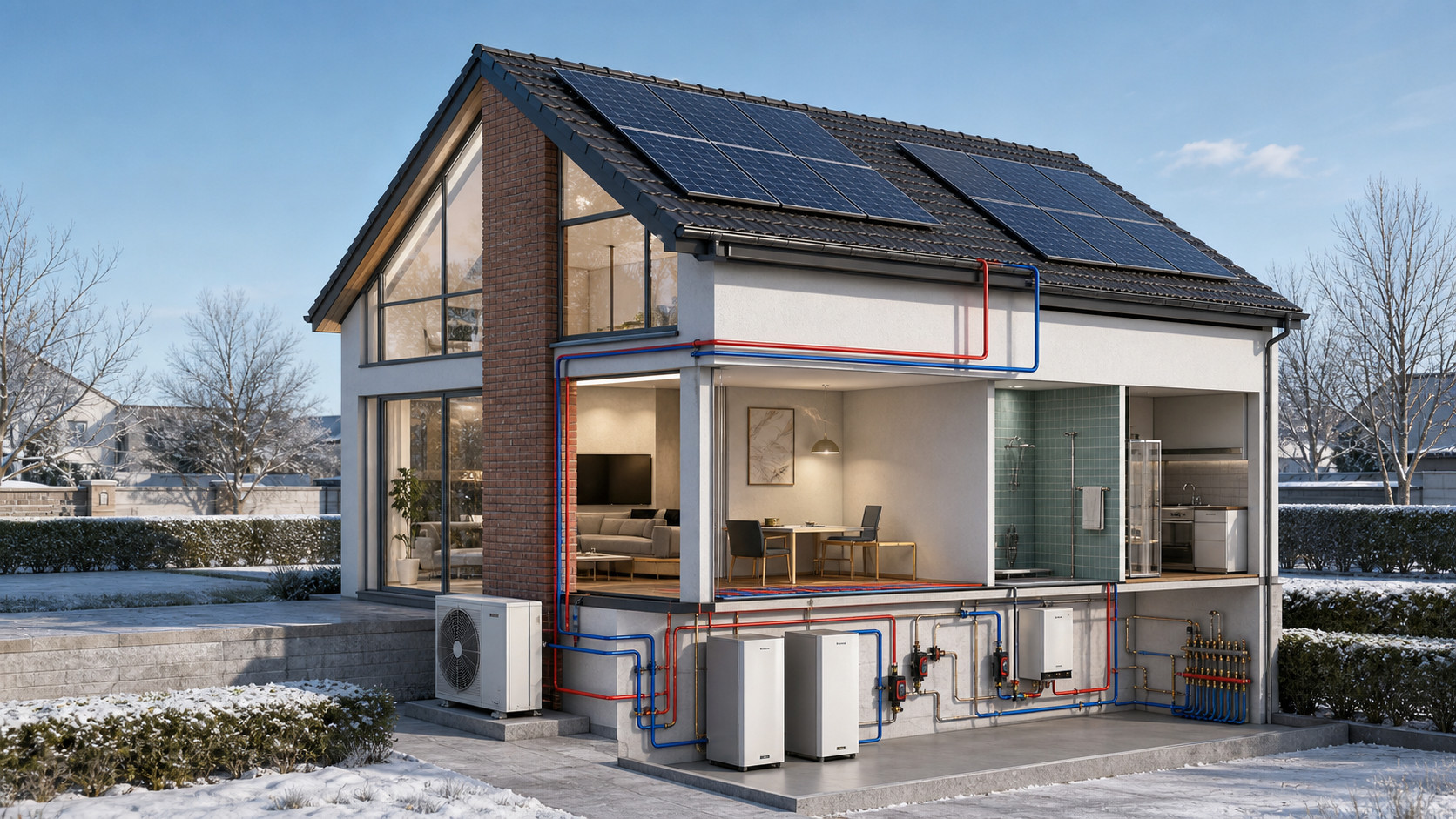
In 2024, an approximately 2,000 m² hospitality property in Beijing integrated phase-change thermal energy storage, an air-source heat pump and electric heat with its existing building-heating infrastructure. Shandong Junminghe Engineering Design Co., Ltd. led the system design, while Jinan Qizhou Technology Consulting Co., Ltd., operating through QIZHOU POWER, coordinated equipment procurement.
Project need
Add flexible heat storage without replacing the existing heating system
The property already had a gas-fired heat-supply plant, domestic-hot-water service and multiple space-heating zones. The engineering task was to add a coordinated thermal-storage loop, then connect it to the established building-heating network without treating the new equipment as an isolated appliance replacement.
Phase-change thermal energy storage
How does PCM thermal storage support a building-heating system?
A phase-change material absorbs and releases latent heat around a selected temperature range. In a hydronic heating system, heat can be produced at one time, stored in the PCM modules and released later through the water circuit. The useful design question is not storage capacity alone: phase-change temperature, charge and discharge power, source and load temperatures, hydraulic interfaces and control timing must work together.
System architecture
Three coordinated layers and one retained plant boundary
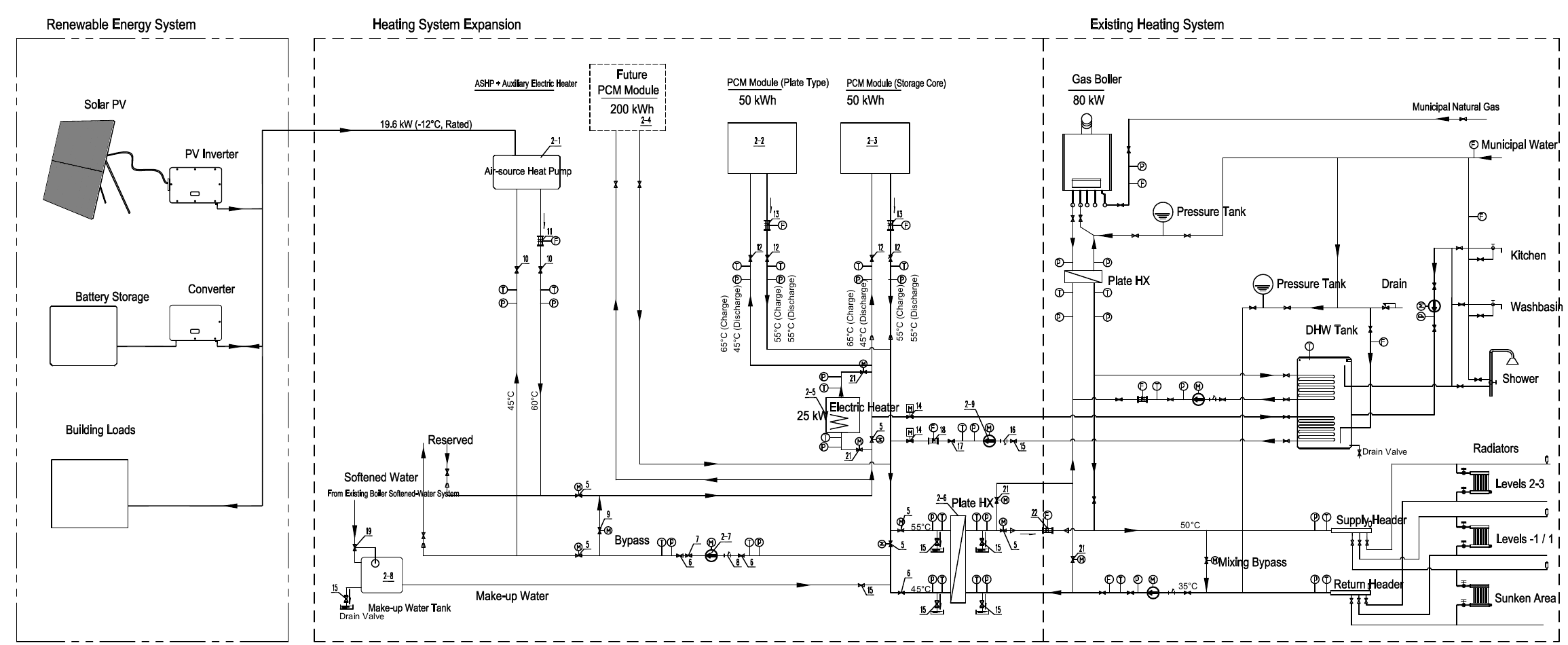
The wider site design considers electrical generation and storage, but the thermal path remains explicit: heat source, PCM storage, plate heat exchange and the existing building-heating network.
Site-energy context
Rooftop solar PV, battery storage and building electrical loads form the wider electrical context. Their dispatch is a control decision, not an assumed priority sequence.
Heat source and storage
An air-source heat pump and 25 kW electric heater connect to two installed 50 kWh PCM modules through a pumped thermal-storage loop.
Heating-system interface
A 125 kW plate heat exchanger separates the expansion loop from the existing 50/35°C building-heating network.
Project system design
A complete system view from energy input to building loads
The project design coordinates the wider renewable-energy context with an air-source heat pump, auxiliary electric heat, two 50 kWh PCM storage modules, plate heat exchange and the retained heating plant. Pumps, valves, metering and temperature and pressure points remain visible so that the hydraulic interfaces and operating boundaries can be understood as one system.
Engineering + Procurement
Clear responsibility across design and equipment procurement
The EP model combined system engineering and equipment coordination while keeping the two accountable roles explicit.
System design
Shandong Junminghe Engineering Design Co., Ltd. developed the system architecture, hydraulic interfaces and design parameters.
Equipment procurement
Jinan Qizhou Technology Consulting Co., Ltd., operating through QIZHOU POWER, coordinated procurement around the approved equipment definition and package interfaces.
Interface coordination
Storage modules, heat sources, pumps, valves, metering and the plate heat exchanger were considered as one connected system.
Installation basis
The design translated temperature, flow, measurement and connection requirements into an installable equipment-and-pipework arrangement.
Installation record
From coordinated design to installed plantroom interfaces
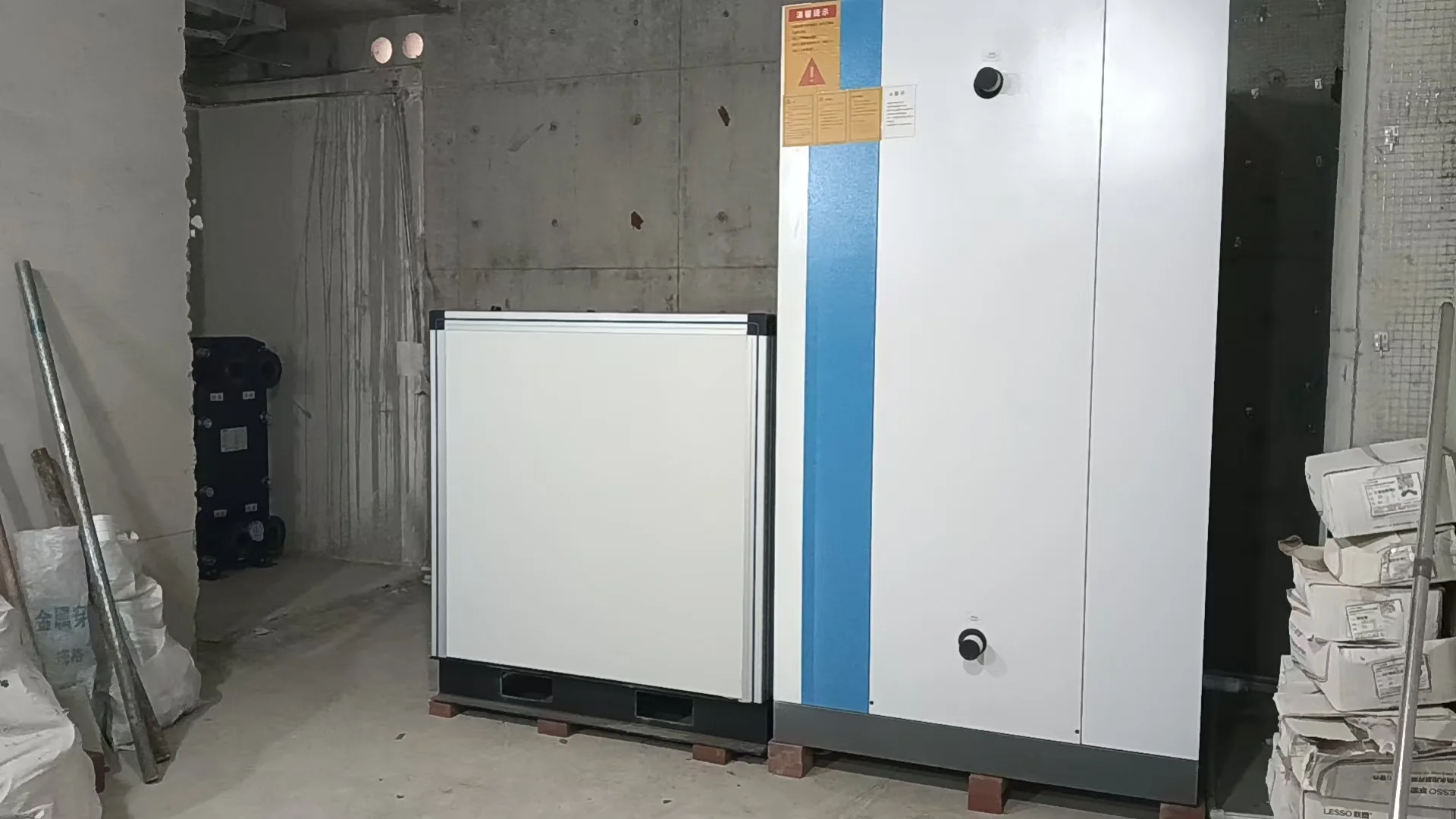
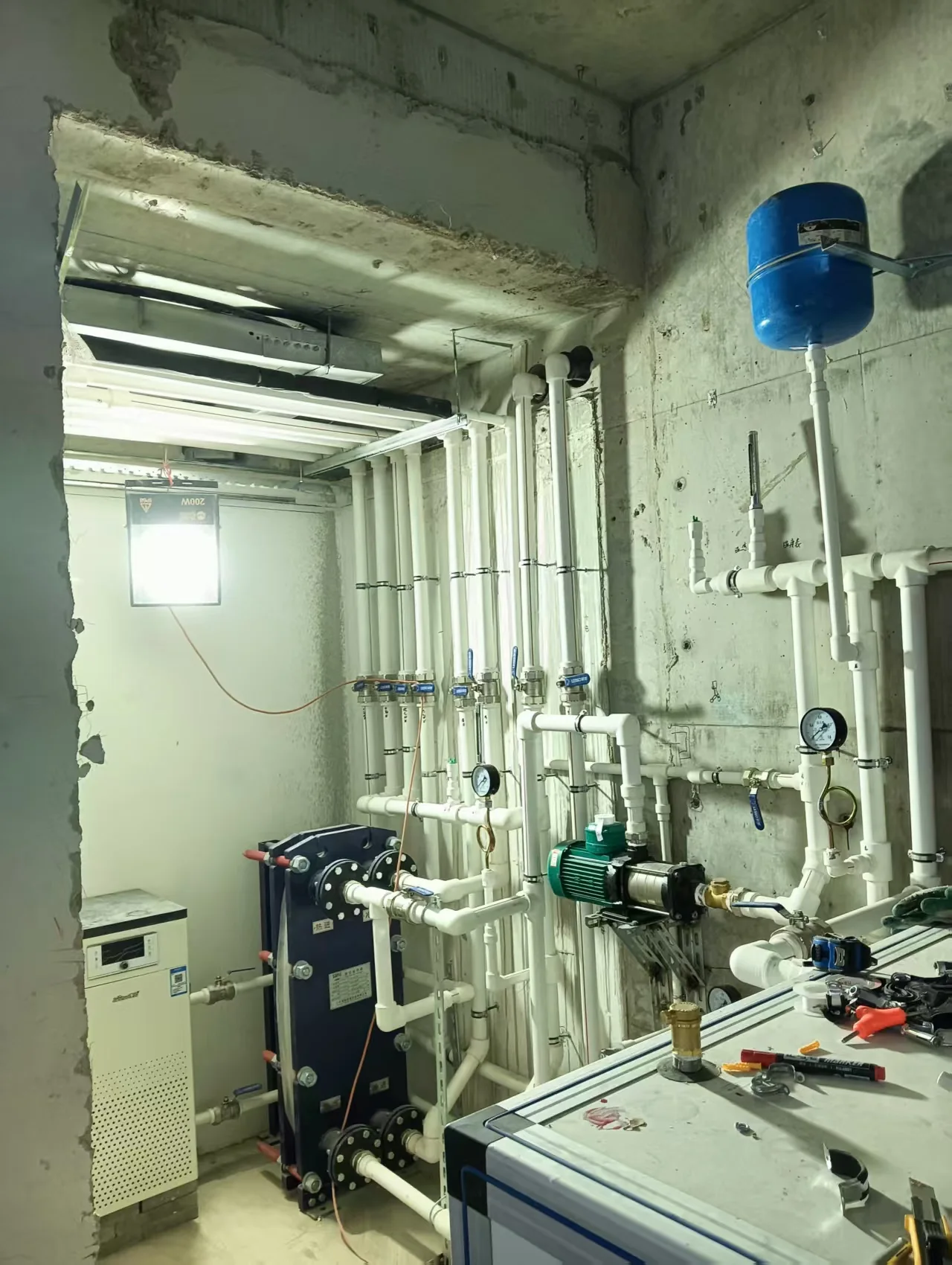
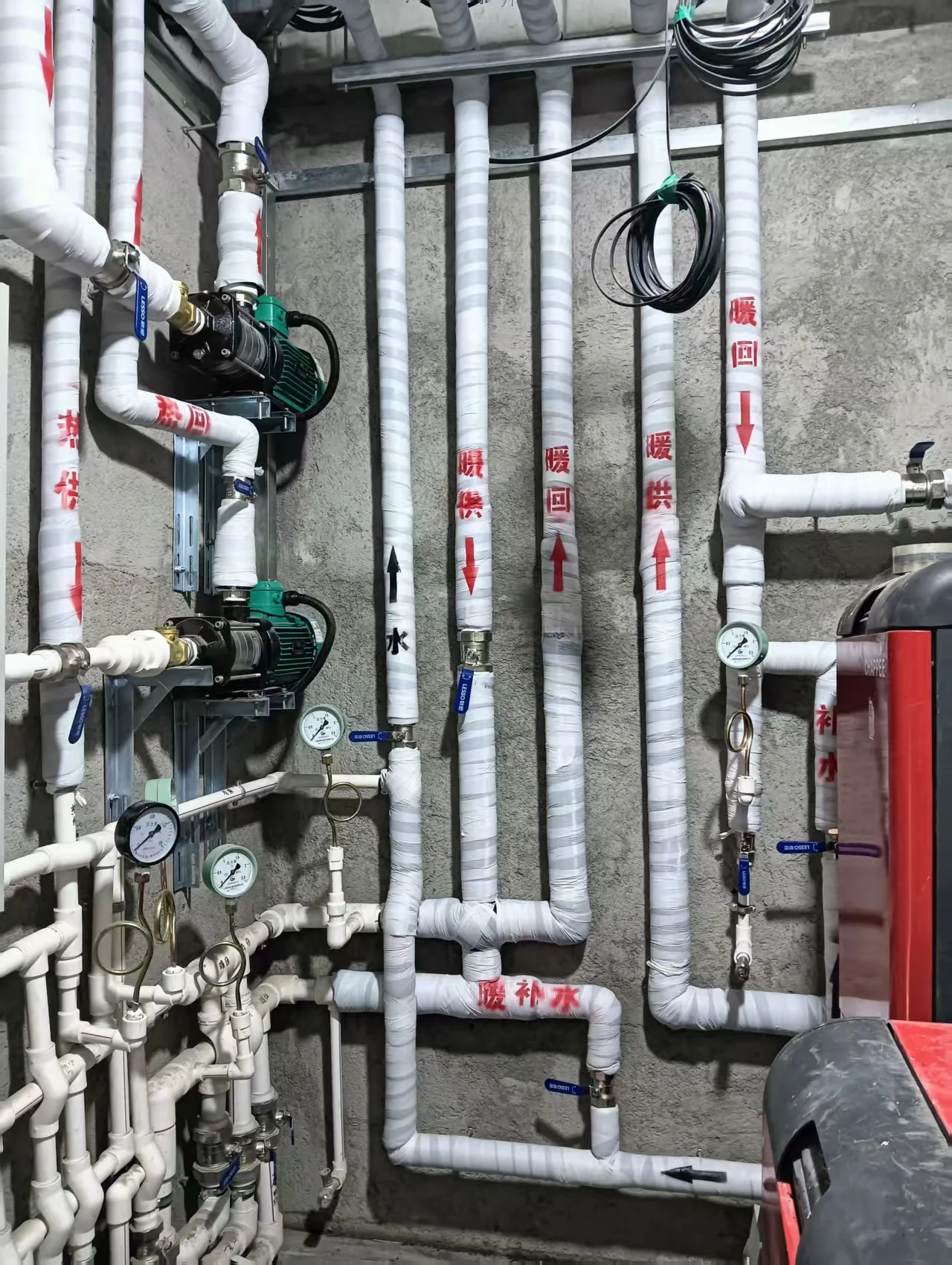
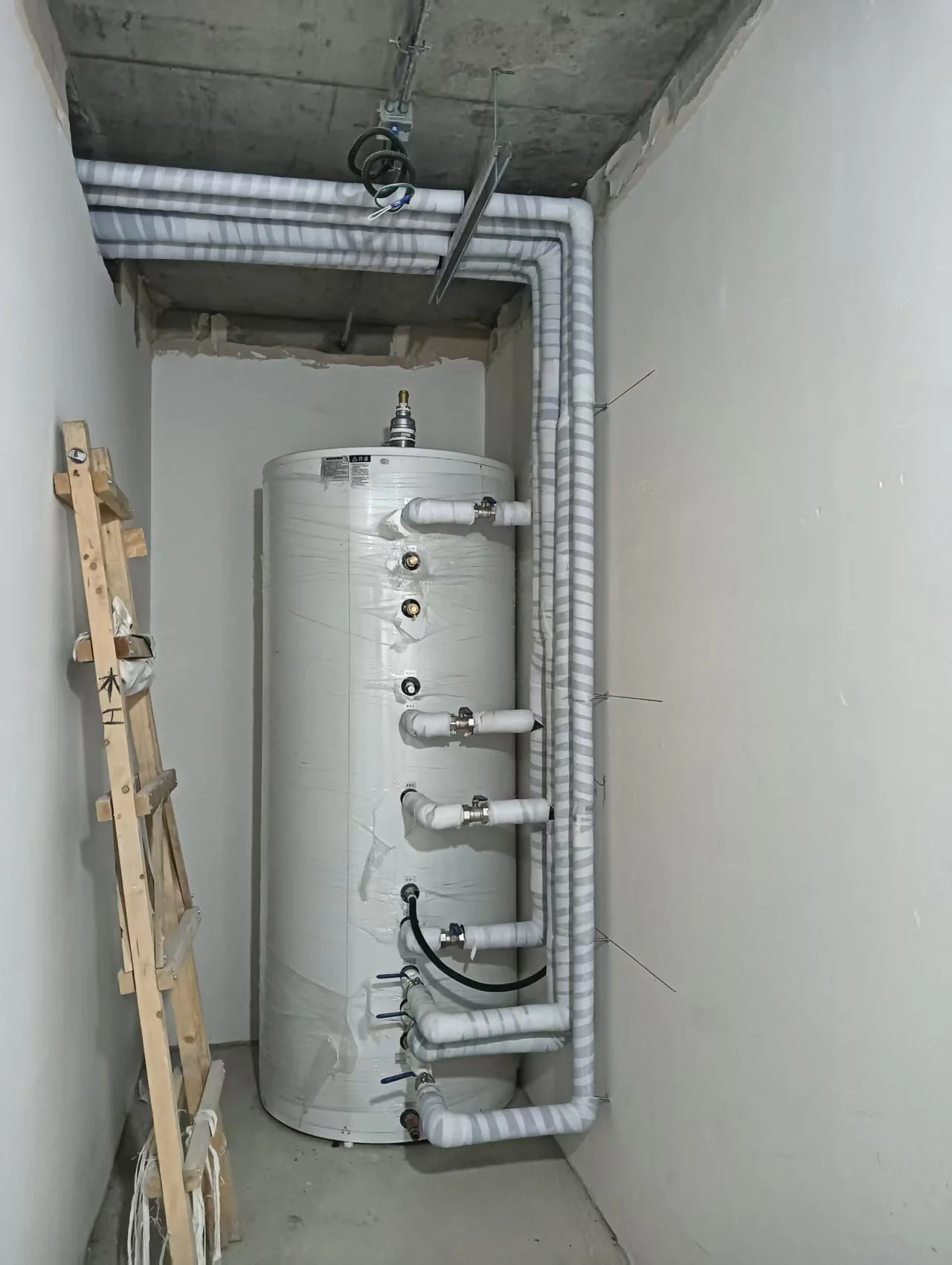
The project reached the equipment-and-pipework installation stage in 2024. Within a compact plantroom, the installation brought together the storage equipment, plate heat exchangers, circulation pumps, insulated water circuits, isolation valves and pressure instrumentation defined by the system design.
Integration decisions
The engineering value sits in the interfaces
Match the temperature window
The design basis uses a 65/55°C charging circuit and a 55/45°C storage-discharge circuit before the building-side 50/35°C heating network.
Separate the hydraulic loops
Plate heat exchange creates a clear boundary between the PCM expansion loop and the existing heating distribution.
Use modular storage
Two 50 kWh modules establish a 100 kWh nominal installed configuration while preserving a modular system architecture.
Retain useful assets
The existing boiler, domestic-hot-water subsystem and building distribution remain part of the overall plant architecture rather than being obscured by the new system.
Practical value
A structured path from an existing plant to a hybrid heating system
- 01Time-shifted heat
Separate part of the heat-production period from the heat-use period.
- 02Asset retention
Integrate new equipment while continuing to use suitable existing plant and distribution assets.
- 03Defined interfaces
Resolve temperatures, flows, heat-exchange duty, measurement points and control boundaries before procurement.
- 04Modular delivery
Coordinate a bounded first configuration without losing the option to adapt future capacity.
Adjacent capability
Phase-change cold storage for cooling duties
Where the operating need is cooling or temperature control, the same engineering and procurement discipline can be applied with phase-change cold-storage media selected for the required temperature range. That is a separate application from this Beijing heating case and requires its own load profile, equipment selection and system interfaces.
Start with the operating data
Planning a phase-change thermal-storage project?
Share the building use, heat-load profile, supply and return temperatures, existing heat-source information, available electrical capacity, tariff periods, plantroom constraints and project schedule. We can define the integration route and the engineering-and-equipment package around the actual requirement.